Tuesday, 25 August 2015
Design Brief and Research Analysis
Conclusion:
All of the techniques noted in this Prezi Production are based upon the research I have undertaken of the existing films and trailers, and also from the results I gained from my primary research from my demographic, these ideas will create the basis of what my trailer and other digital print products will consist of, regarding camera angles, mise-en-scene, sound and effects, and finally the plot conventions within a trailer, I will also be using the Lexicon novel as a guide for all of these components in all three products.

Monday, 10 August 2015
Survey Results
Q1.


Q5.
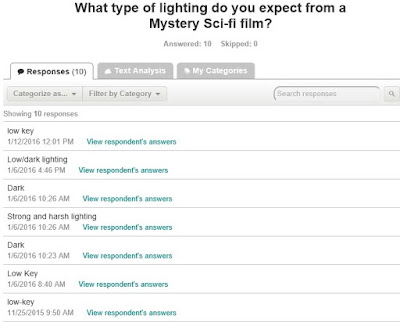


Q3.

Q4.


Q6.

Q7.

Q8.

Q9.

Q10.

Conclusion:
From my results I am able to illustrate ideas for my Mystery Sci-Fi Trailer, the ideas will be based upon what my audience will prefer to see, I am also aware of what filming techniques should be used in the trailer, regarding camera angles, sound, lighting, editing and locations.
I also have a better idea of the plot and the characters that I will be portraying within the trailer.
This will be further explained in the 'Design Brief and Conclusion of my Survey Results' Post.
This will be further explained in the 'Design Brief and Conclusion of my Survey Results' Post.
Wednesday, 22 July 2015
Sunday, 19 July 2015
Conventions of the Mystery Sci-fi Genre
Conventions of Sci-fi
The typical narrative in sci-fi films are that there is either new technology such as robots, new scientific principles such as time travel or new political systems such as that seen in the film Minority report. They always have conflicting sides of good and evil.
The time settings are usually in the past or the present as it contradicts historical records, however some sci-fi films are made in present day, such as the film Lucy.
Conventions of sci-fi would consist of futuristic props, costume, setting; all of which will display the scientific advancement of society.
Techniques used in these films would enhance the scientific and fictional elements of the film, such as special effects and close ups of technology or fictional object.
The common setting of sci-fi films would be in outer space, other worlds or alternative versions of Earth.
Conventions of Mystery
The typical story-line for a mystery film would be that the plot is 'usually based around the protagonist attempting to unravel the crime or situation by piecing together clues and circumstances, seeking evidence, interrogating witnesses, and tracking down a criminal.' a good example of this would be the film Non-Stop.
Characters may differ in this genre as the mystery may not be revealed until the last ten minutes, this means that characters may switch roles or change importance within the plot. There does not necessarily need to be a certified detective, instead a civilian could solve the crime.
The setting of a mystery film is not set in stone, it can change depending on the journey the characters go through throughout the film, the plot will determine the setting. However the scene of the crime will always appear at some point in the film.
Editing in the film is very important as it will create a particular mood depending on the transitions and the cuts between clips, such as a black out fade being used to add suspense and unease to the scene.
Pathetic fallacy is often used within mystery films, this means that the weather or setting will reflect the mood of the scene.
Sounds usually include soundtracks that are played at important points throughout the film.
The theme of a mystery film is usually seen as a conspiracy or pursuit of an object or a person.
The typical narrative in sci-fi films are that there is either new technology such as robots, new scientific principles such as time travel or new political systems such as that seen in the film Minority report. They always have conflicting sides of good and evil.
The time settings are usually in the past or the present as it contradicts historical records, however some sci-fi films are made in present day, such as the film Lucy.
Conventions of sci-fi would consist of futuristic props, costume, setting; all of which will display the scientific advancement of society.
Techniques used in these films would enhance the scientific and fictional elements of the film, such as special effects and close ups of technology or fictional object.
The common setting of sci-fi films would be in outer space, other worlds or alternative versions of Earth.
Conventions of Mystery
The typical story-line for a mystery film would be that the plot is 'usually based around the protagonist attempting to unravel the crime or situation by piecing together clues and circumstances, seeking evidence, interrogating witnesses, and tracking down a criminal.' a good example of this would be the film Non-Stop.
Characters may differ in this genre as the mystery may not be revealed until the last ten minutes, this means that characters may switch roles or change importance within the plot. There does not necessarily need to be a certified detective, instead a civilian could solve the crime.
The setting of a mystery film is not set in stone, it can change depending on the journey the characters go through throughout the film, the plot will determine the setting. However the scene of the crime will always appear at some point in the film.
Editing in the film is very important as it will create a particular mood depending on the transitions and the cuts between clips, such as a black out fade being used to add suspense and unease to the scene.
Pathetic fallacy is often used within mystery films, this means that the weather or setting will reflect the mood of the scene.
Sounds usually include soundtracks that are played at important points throughout the film.
The theme of a mystery film is usually seen as a conspiracy or pursuit of an object or a person.
Saturday, 18 July 2015
Minority Report Film Analysis
Camera Angles:
The opening of the film was composed of a number of close up shots and tracking the antagonist in the moment. These shots were very disjointed and blurred, this insinuated that it was some sort of flashback or vision. The camera angles in relation with the series of shots connote that the scenes are from the antagonists point of view.
The juxtaposition between the general public and the 'Prefeds' is shown through the low and high angle shots, at first Tom Cruise was seen from a low angle perspective as he was seen as the dominant character in the police force, when he is then accused of murder we meet him at a neutral level, this then becomes a high angle as we are viewing scenes from the perspective of the police force, this shows the character in a more inferior light.
An arc is often used when Tom Cruise' character is on his own or center of attention, we see this when he is watching holographic videos of his son, the camera shot gives the audience time to think about what is happening during the scene, or causes us to think what the character is thinking.
A science fictional object used in the film was used to frame the antagonist character at the first crime scene, the 'halo' circled the character who was in the distance, this was shot from a low angle which allowed us to notice the significance of this character within this particular scene.
Sound:
A lot of the atmosphere in the film is created through the use of an orchestra playing different soundtracks, depending on the instruments used there are ominous and cheerful moods created through the playlists.
Many echoes and surreal sounds such as enhanced heartbeats and water are created using folly, this increases the tension within the scenes.
The dialogue in the film is chosen specifically to include futuristic words, the dialect of the characters fits with the genre of the film.
Mise-en-scene:
The mise-en-scene of the film was mainly created using CGI, this is because the film was set in the year 2054 this means that the cars and city and interior of the buildings are made to look futuristic, as this is such a large project to make by hand it is best to use green screens and CGI.
A majority of the clothing is black and white, this is the same for the buildings, however the cars are of different colours, this could suggest that the people in the city have the freedom to travel, however all of their actions are recorded and monitored, this explains the restrictions and reasoning for the colour scheme.
Effects:
The conventions of this genre determine the pace and length of the clips throughout the film. during the opening of the film there was a montage of short, fast paced and disjointed clips, these clips then had a blurring and distorting effect added to them during editing, the clips were also in slow motion. These techniques were used to make the audience attempt to piece together the puzzle that is created through these clips.
Plot:
The plot of this film is essentially the idea that a new futuristic machine that predicts future crimes, this then causes problems as there is a 'fault' with the system which causes it to predict a murder that has been instigated by the main character (Tom Cruise) who is a 'Prefed' detective. The main character then goes on the run, the audience follow his journey as more questions arise the intensity of the film rises until the end when all is revealed to the audience and the characters.
The opening of the film was composed of a number of close up shots and tracking the antagonist in the moment. These shots were very disjointed and blurred, this insinuated that it was some sort of flashback or vision. The camera angles in relation with the series of shots connote that the scenes are from the antagonists point of view.
The juxtaposition between the general public and the 'Prefeds' is shown through the low and high angle shots, at first Tom Cruise was seen from a low angle perspective as he was seen as the dominant character in the police force, when he is then accused of murder we meet him at a neutral level, this then becomes a high angle as we are viewing scenes from the perspective of the police force, this shows the character in a more inferior light.
An arc is often used when Tom Cruise' character is on his own or center of attention, we see this when he is watching holographic videos of his son, the camera shot gives the audience time to think about what is happening during the scene, or causes us to think what the character is thinking.
A science fictional object used in the film was used to frame the antagonist character at the first crime scene, the 'halo' circled the character who was in the distance, this was shot from a low angle which allowed us to notice the significance of this character within this particular scene.
Sound:
A lot of the atmosphere in the film is created through the use of an orchestra playing different soundtracks, depending on the instruments used there are ominous and cheerful moods created through the playlists.
Many echoes and surreal sounds such as enhanced heartbeats and water are created using folly, this increases the tension within the scenes.
The dialogue in the film is chosen specifically to include futuristic words, the dialect of the characters fits with the genre of the film.
Mise-en-scene:
The mise-en-scene of the film was mainly created using CGI, this is because the film was set in the year 2054 this means that the cars and city and interior of the buildings are made to look futuristic, as this is such a large project to make by hand it is best to use green screens and CGI.
A majority of the clothing is black and white, this is the same for the buildings, however the cars are of different colours, this could suggest that the people in the city have the freedom to travel, however all of their actions are recorded and monitored, this explains the restrictions and reasoning for the colour scheme.
Effects:
The conventions of this genre determine the pace and length of the clips throughout the film. during the opening of the film there was a montage of short, fast paced and disjointed clips, these clips then had a blurring and distorting effect added to them during editing, the clips were also in slow motion. These techniques were used to make the audience attempt to piece together the puzzle that is created through these clips.
Plot:
The plot of this film is essentially the idea that a new futuristic machine that predicts future crimes, this then causes problems as there is a 'fault' with the system which causes it to predict a murder that has been instigated by the main character (Tom Cruise) who is a 'Prefed' detective. The main character then goes on the run, the audience follow his journey as more questions arise the intensity of the film rises until the end when all is revealed to the audience and the characters.
Friday, 17 July 2015
Minority Report Trailer Evaluation
Camera shots:
An extreme close up is used at the beginning is a very surreal technique to open the trailer, in doing this the audience's attention is immediate, this has a kick start to the action and mystery that follow in the trailer.
Zooming on key features of a scene allows the audience to understand the significance and relate it to the events that take place, for example the zoom on the woman in the pool system tells us that the character/object is important in future events of plot.
Tracking a character, such as Tom Cruise's gives them longer screen time and higher importance in the story, we are able to understand the persona of the character, this is what is needed for the audience to sympathise for the character later in the trailer.
Overhead shots are used to highlight the surrealism of the three women in the pool who are part of the technology that indicates future crimes, this technology is unlike anything that is used in the current era and is very far from invention. It is used again as Tom Cruise enters the warehouse of highly developed technology with one of the women used in the mechanism that can tell of future crimes, again the idea of development is emphasized as a mass production and easy process.
Sound:
The opening to the trailer uses a low key monotone piece of dialogue 'murder', the word is known by everyone and creates a unnerving atmosphere and raises questions of why it is said and what is meant by it.
The backing track uses an orchestra which increases the tension of the scene and whole trailer as the volume increases towards the end, this technique is used to compose an original soundtrack that can be manipulated throughout the trailer to inflict different moods and emotions on the audience.
A voice over is used throughout the trailer as a marketing technique as it emphasizes the main plot and provides information about the producer; Steven Spielberg who is very well-known and famous for other incredible films such as India Jones and Transformers. This information is what attracts the viewers to watch the film.
Diegetic and non diegetic sound is emphasised using folly, for example the gun shot has been recorded in a closed space so that the sound of the shot echoes and appears louder, this is diegetic in the trailer, non diegetic folly in the trailer could include the 'swoosh' sound used when screens are moved on the 'system' or when there is a transition of clips or fast movements, it joins the actions together and gives the action more energy.
The dialogue spoken between Tom Cruise's character and Colin Farrell's character about the system they're using having any flaws, followed by 'you're in a lot of trouble... I have a warrant in my pocket that says murder', the twist of roles from Tom Cruise being the hero, to being the hunted, yet claiming innocent gives the audience more of a reason to watch the film as it is not a typical hero, villain plot.
Mise-en-scene:
The conventional use of the colour blue regularly appears in this film when the scene is important and impressionable, the colour blue is very noticeable in a low key scene.
Clothing that is commonly associated with the future tend to be contrasts between black and white, black leather jackets are worn by multiple characters throughout the trailer whilst bright white LED lighting is used in their surrounding, this connotes the pristine lives and society in the trailer, however flaws are being described via dialogue and voice overs, this reflects how the appearance of something or someone can mask the true identity or events that are happening in the world of the film. Subtle techniques like this enhance the mystery of the film.
The advancement in technology is not as discrete however allows the audience to understand that this technology is not perfect either, as said in the trailer, there are 'flaws' in the advancements and dangers that play a large role in the trailer. The everyday technology such as cars seem to run smoothly and organised, just as the 'perfect' world would, again masking the chaos of the lives behind what can me seen.
Low key lighting is used in this genre as it connotes a sense of the unknown of the futuristic technology and the complications of the technology that is being used in the film. The mystery and science fictional elements work in a partnership with each other to create this film, in only the trailer the audience enjoy the action and the plot, making them wish to see the whole film.
Narrative:
Staccato clips are used to represent the disorder of the plot, all clips are detached from each other and do not make complete sense, just like the plot of the trailer; the pieces do not fit together to solve the puzzle, this is reflected by the sequence of clips in the trailer.
The use of the text appearing on the screen after a key message in a short sequence of clips. This text briefly narrates the story-line to the audience whilst watching the trailer.
Thursday, 16 July 2015
Maze Runner Film Analysis
Camera Angles:
I found patterns in what camera angles were used throughout the film, I noticed that high and low angles are used very frequently along with pans moving vertically up or down; these camera angles connotes ideas of an omnipotence and larger force surrounding the 'greenies'. And the end of the film we learn that in fact the maze has been set as a test by an unknown organization.
There are also very common shots that include more than one character in a frame (two and three shots), it is also common to see all of the 'greenies' in one shot (long shots and wide angles), this shows that they are united together. This becomes disjointed when 'Thomas' disobeys rules and makes his own rational decisions this is often shown using tracking and close ups of the character, these shots are very fast paced and short clips that sometimes become difficult to follow, reflecting his impact on the 'Glade'.
Sound:
Most of the sound in the film is diegetic, such as the dialogue and naturalistic sounds, however these are often interrupted by the surreal disembodied sounds of the 'grievers' these sounds would have been created in a studio using folly techniques.
Although, at the beginning of the film, only sound was used to create an idea of what might be happening. As the screen was black the audience are able to hear industrial-like sounds, such as metal scraping and gears turning, we then begin to identify ourselves of where we are; in a caged elevator.
Mise-en-scene:
During the first two minutes of the film we are only revealed to a black screen, this then lightens slightly to show us the main character, the use of low-key lighting creates a foreboding effect, this accompanies the intensifying music. The lighting used is, again, very industrial strip lights, they create a very cold atmosphere and follow the conventions of a Mystery Sci-fi trailer.
There is a distinguishable contrast between the greens of the 'glade' and the cold greys of the maze, I noticed that vines are growing up and down the walls of the maze, this connotes the fight between the 'gladers'.
Effects:
The most impact caused by effects in the film is when 'Thomas' has a flashback, this scene uses partnership between layering of several clips, each one semi translucent and very fast paced, there are disjointed voices used as a sound bridge and a blue filter throughout.
Plot:
The plot to this film is similar to that of Cowboys and Aliens, the main character does not remember his past, other than this there are no other comparisons. There is an omnipotent atmosphere throughout the film as we follow the journey of 'Thomas' and the 'gladers' and their fight to find the truth about why they're there.
I found patterns in what camera angles were used throughout the film, I noticed that high and low angles are used very frequently along with pans moving vertically up or down; these camera angles connotes ideas of an omnipotence and larger force surrounding the 'greenies'. And the end of the film we learn that in fact the maze has been set as a test by an unknown organization.
There are also very common shots that include more than one character in a frame (two and three shots), it is also common to see all of the 'greenies' in one shot (long shots and wide angles), this shows that they are united together. This becomes disjointed when 'Thomas' disobeys rules and makes his own rational decisions this is often shown using tracking and close ups of the character, these shots are very fast paced and short clips that sometimes become difficult to follow, reflecting his impact on the 'Glade'.
Sound:
Most of the sound in the film is diegetic, such as the dialogue and naturalistic sounds, however these are often interrupted by the surreal disembodied sounds of the 'grievers' these sounds would have been created in a studio using folly techniques.
Although, at the beginning of the film, only sound was used to create an idea of what might be happening. As the screen was black the audience are able to hear industrial-like sounds, such as metal scraping and gears turning, we then begin to identify ourselves of where we are; in a caged elevator.
Mise-en-scene:
During the first two minutes of the film we are only revealed to a black screen, this then lightens slightly to show us the main character, the use of low-key lighting creates a foreboding effect, this accompanies the intensifying music. The lighting used is, again, very industrial strip lights, they create a very cold atmosphere and follow the conventions of a Mystery Sci-fi trailer.
There is a distinguishable contrast between the greens of the 'glade' and the cold greys of the maze, I noticed that vines are growing up and down the walls of the maze, this connotes the fight between the 'gladers'.
Effects:
The most impact caused by effects in the film is when 'Thomas' has a flashback, this scene uses partnership between layering of several clips, each one semi translucent and very fast paced, there are disjointed voices used as a sound bridge and a blue filter throughout.
Plot:
The plot to this film is similar to that of Cowboys and Aliens, the main character does not remember his past, other than this there are no other comparisons. There is an omnipotent atmosphere throughout the film as we follow the journey of 'Thomas' and the 'gladers' and their fight to find the truth about why they're there.
Subscribe to:
Posts (Atom)